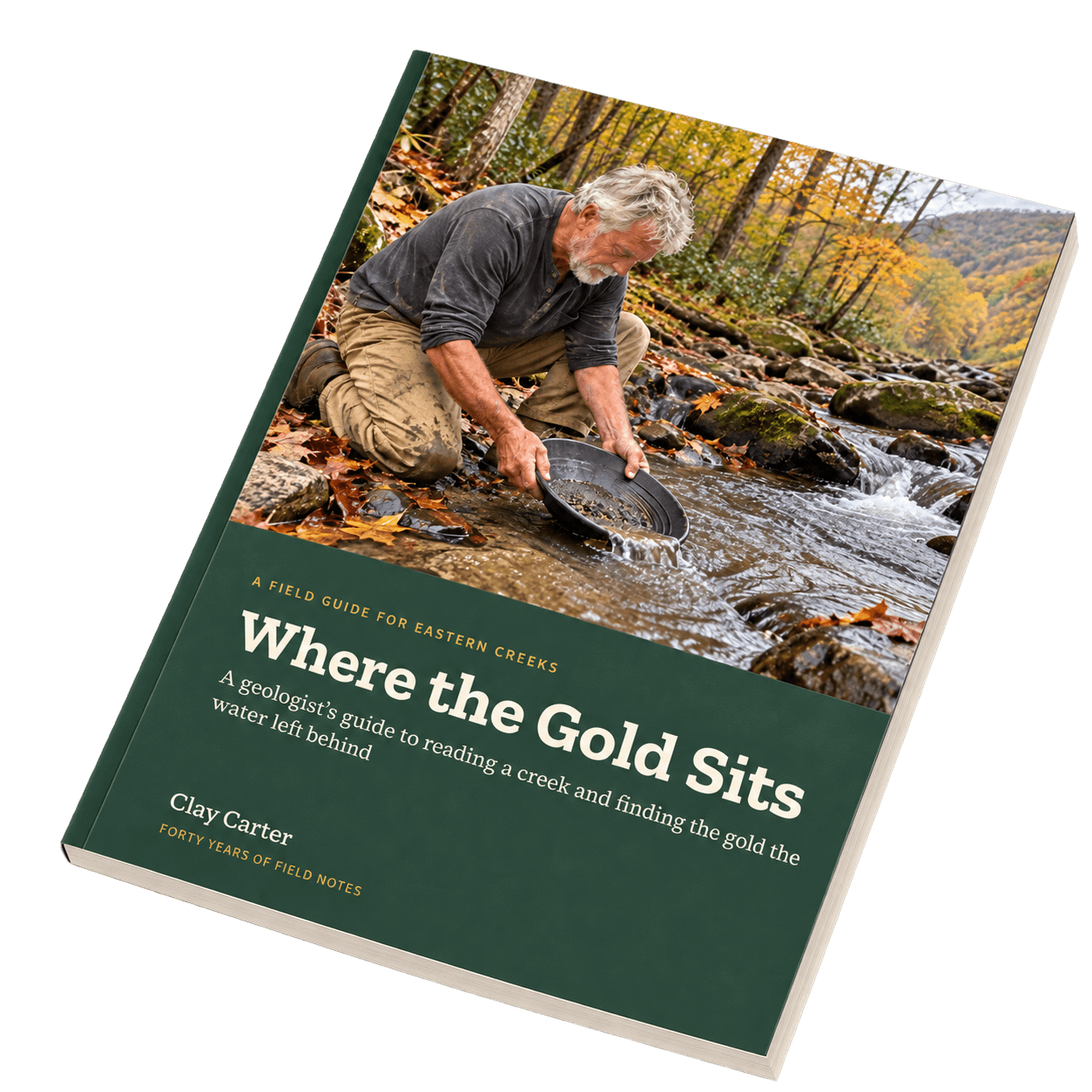
A field guide for Eastern creeks
Where the gold sits in any creek
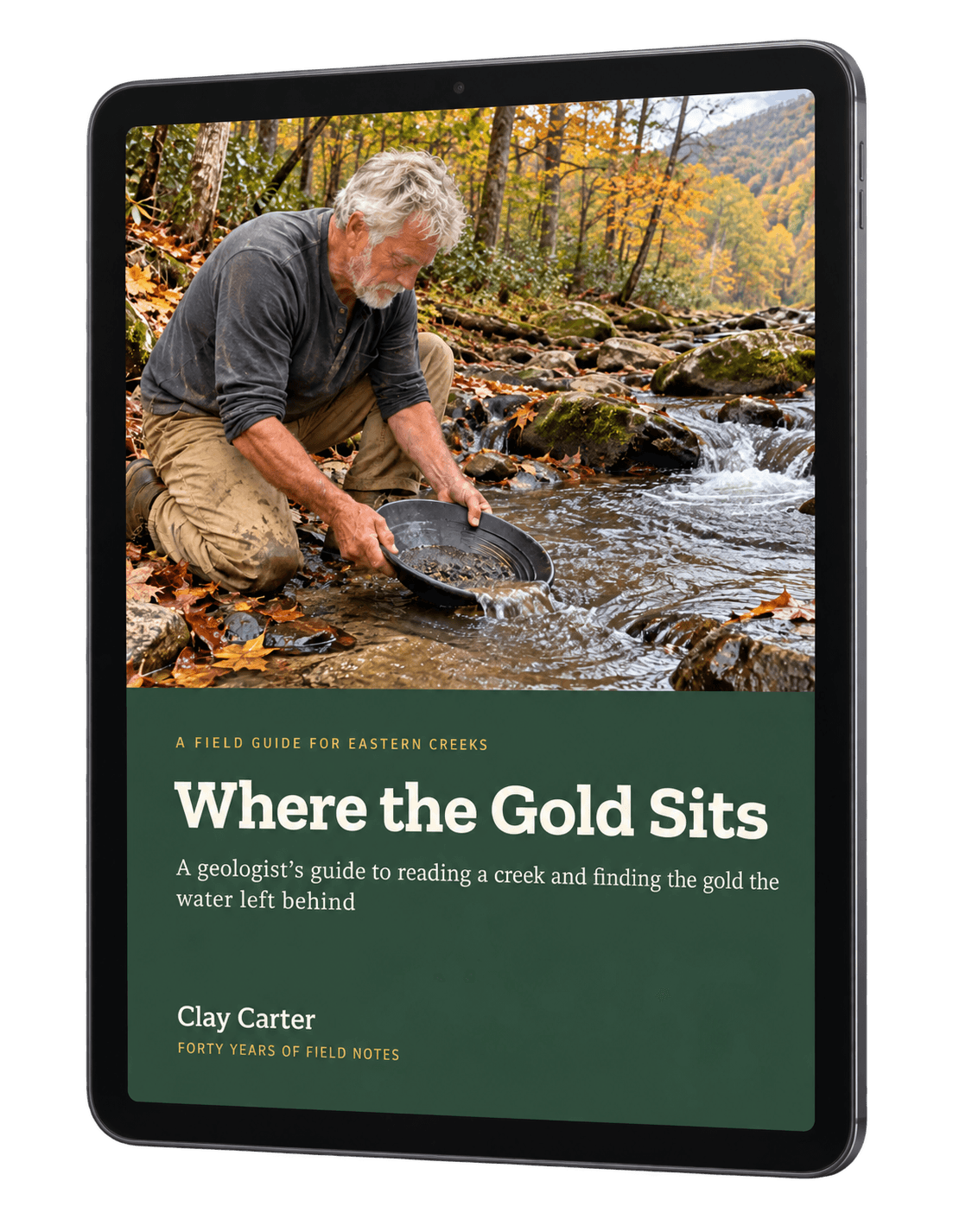
Sixty pages of plain-spoken field notes on reading a creek the way the water does: where gold drops, why most people dig at the wrong end, and how to follow it upstream.
Instant PDF download · Prints at home · 60 pages
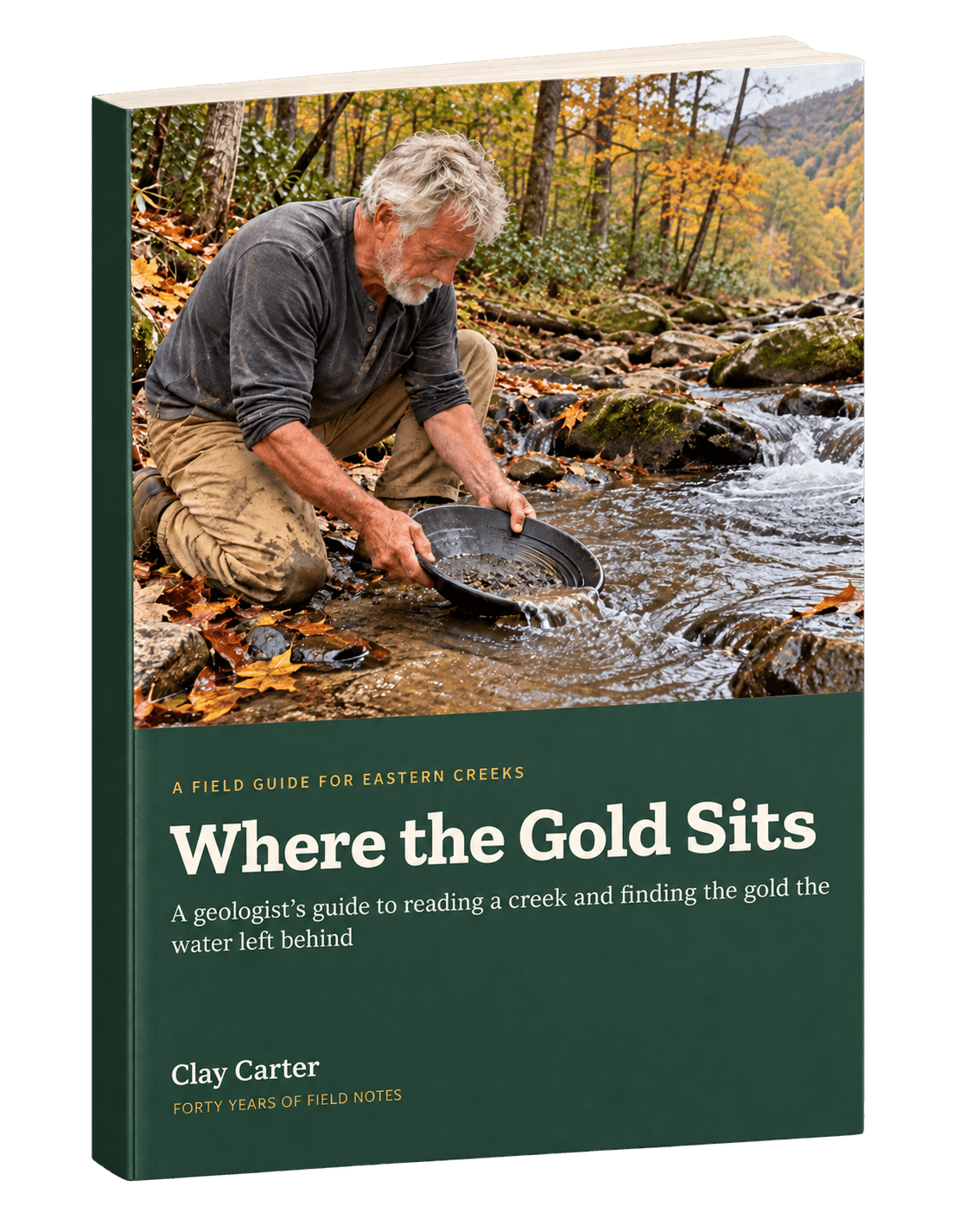
The mistake almost everybody makes
Most people dig at the wrong end of the creek
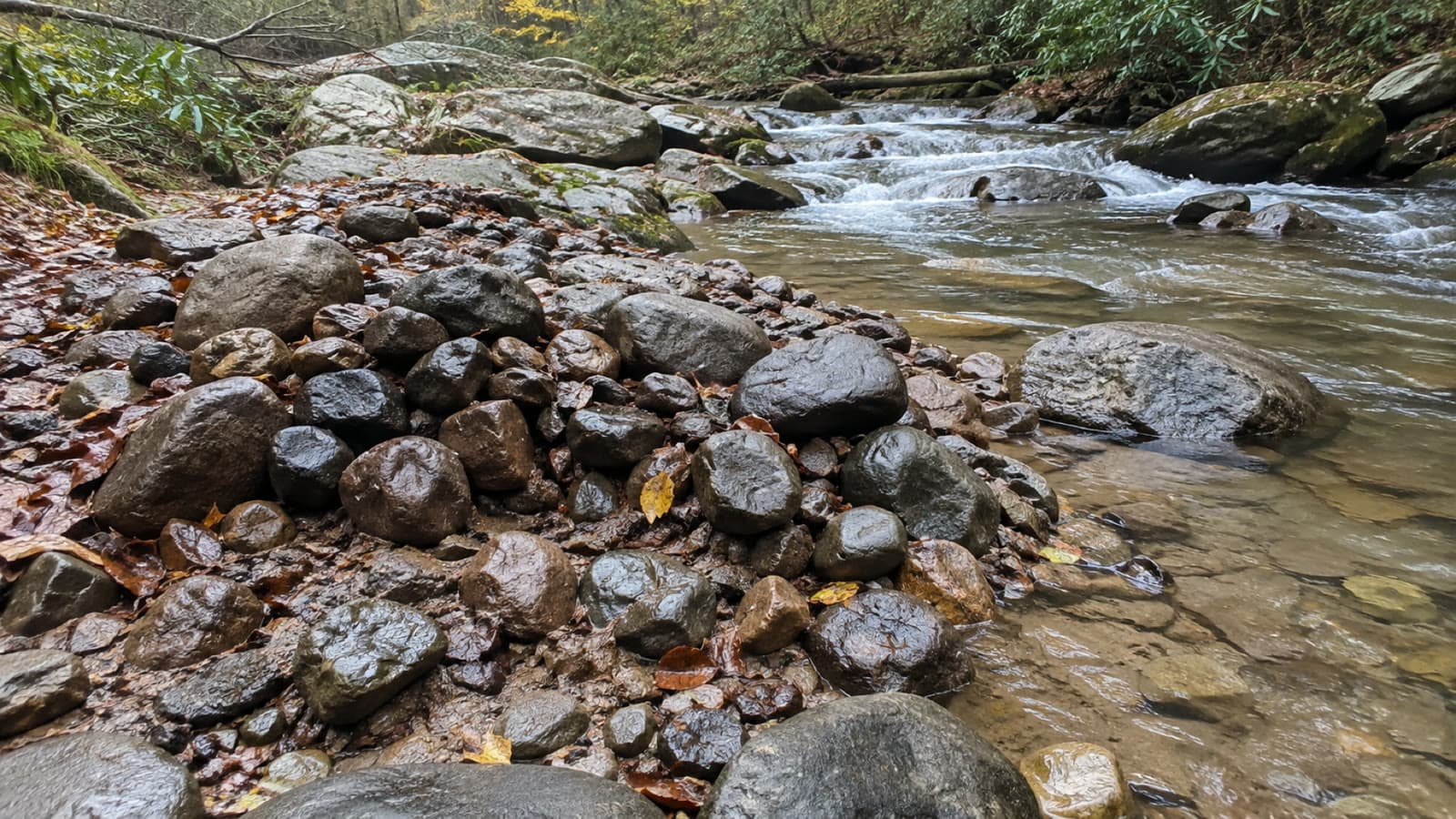
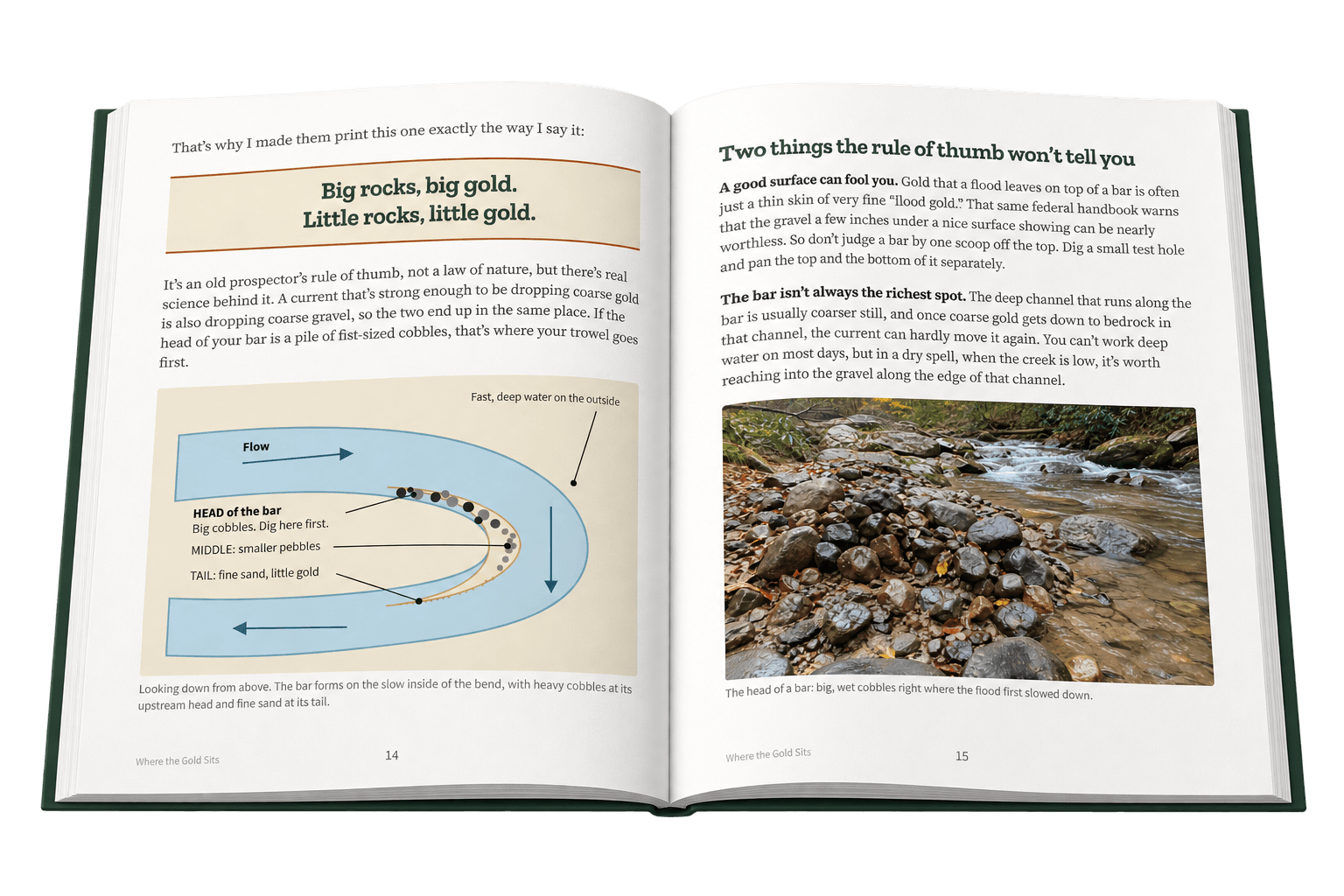
They walk to the inside bend, which is right. Then they dig in the soft, pretty sand at the tail of the bar, which is wrong. The gold dropped out at the head of the bar, under the big cobbles, the moment the flood first slowed down.
Moving water sorts heavy things from light things the same way every time. Once you understand how it does that, you stop guessing and start reading the creek. That's what this guide teaches, in seven signs, in the order I look for them.
Little rocks, little gold.
Seen the video? Watch it on the channel. This guide is the full version, with the diagrams, the rules, and the printables.
Inside the guide
Seven signs that tell you where the gold went
One chapter for each sign, with clear drawings of what to look for and a short saying to remember at the creek. Every fact checked against geological surveys and government sources.
- Sign 1
Dig the head of the bend
Why the gold drops at the upstream end of the bar, and why the soft sand at the tail fools nearly everybody.
- Sign 2
Follow the black rocks
Black sand, heavy dark cobbles, and the glittery mica that breaks beginners' hearts.
- Sign 3
Read the creek at flood
How to see the flood that isn't there, and the boulders, logs, and moss that catch gold.
- Sign 4
Dig till your shovel rings
Bedrock, cracks, potholes, and the false bedrock that stops people short.
- Sign 5
When the rock changes, listen
Rusty rock and quartz stringers in the bank, and what they really mean.
- Sign 6
The old-timers' rock piles
Old benches above the creek, and what those hand-stacked cobbles in the woods are telling you.
- Sign 7
Don't stop when you find gold
Sampling like a geologist, finding the pay streak, and following the gold upstream.
- Plus
Panning, the rules, and the kit
Step-by-step panning, gold versus fool's gold, what to buy, and where you're allowed to pan.
Everything that's in it
A field guide you'll actually take to the creek
- The seven signs, one chapter each, with diagrams
- Panning, step by step, plus the beginner mistakes that lose gold
- Is it gold? The simple tests that tell gold from pyrite and mica
- The kit: what to buy, what to skip, and what it really costs
- The honest rules for Georgia, the Carolinas, Virginia, and Alabama: where you can pan, and where you can't
- Staying safe: cold water, flash floods, ticks, snakes, and slick rock
- Your first two weekends: a plan that puts it all to work on one creek
- Printables: a creek checklist and field log pages
- Large, easy-to-read type that prints cleanly at home
A letter from Clay
Why I wrote it down
My wife told me that if I didn't write forty years of field notes down, they'd go in the ground with me. She was right, the way she usually is.
I learned to pan before I learned to drive. My granddaddy taught me on a creek outside Dahlonega, Georgia, with a steel pan that already had a dent in the rim. He told me the dent made it pan better. I never argued with him, and that pan still hangs in my shop.
This isn't a get-rich book. Back East, most of the gold in our creeks is fine: flakes and specks, not nuggets. But there's nothing quite like that first warm flash of yellow in the bottom of your pan, when you know you found it because you read the water right.
Clay Carter

Good questions
Before you buy
What exactly do I get?
A 60-page PDF field guide, US Letter size. You can download it the moment you pay, and we'll email you the link as well so you can find it again.
Can I print it?
Yes. It's laid out to print on ordinary letter paper, with large, easy-to-read type. The creek checklist and the field log pages are made to print and take with you.
Does it cover my state?
The rules, history, and where-to-look sections cover the Eastern gold belt in detail: Georgia, North Carolina, South Carolina, Virginia, and Alabama. The seven signs work on any creek, because water sorts gold the same way everywhere.
I've never panned before. Is it for me?
It was written for you. Every term is explained in plain words, and there's a step-by-step panning chapter, a list of the mistakes that lose gold, and a plan for your first two weekends.
Do I need expensive equipment?
No. The guide lists exactly what you need, which comes to about $40 for a starter kit, and tells you what to skip. A pan is the right tool for Eastern creek gold.
Will I get rich?
No, and the book says so plainly. Most gold in Eastern creeks is fine flakes. What you'll get is the ability to read a creek and find the color the water left behind, which is the real fun of it.
What if it isn't for me?
Email help@claycarter.co within 30 days and we'll refund you in full.
Where the Gold Sits
Pull up a bucket. Let's go read some water.
The full field guide, 60 pages, as an instant PDF download for $27.
Secure checkout by Stripe · Download straight after payment · Link emailed to you